Order Araneae

The silent architects of the natural world

Spiders have spent 380 million years perfecting the art of engineering, predation, and survival. They exist on every continent except Antarctica and outnumber humans 2.8 million to one.

49,000+
Known species
380M
Years on Earth
800M
Tons of prey/year

Meet the hunters

From ambush predators to web-spinning engineers, each species has evolved a unique strategy for survival.
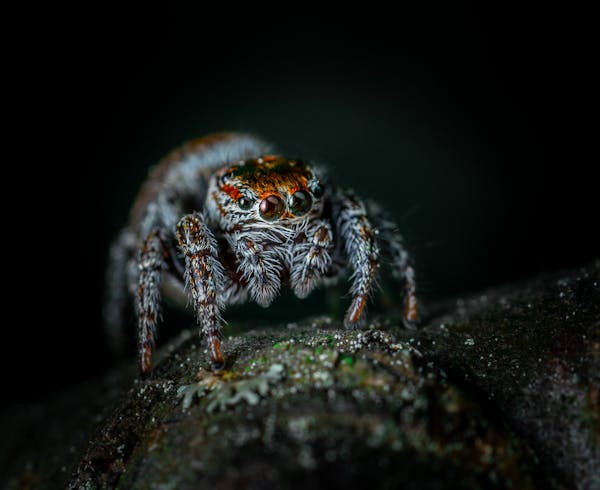
Macro photo of a spider

Jumping Spider

Salticidae

Exceptional vision with four pairs of eyes. Can leap up to 50x their body length. Known for curious behavior and complex courtship dances.
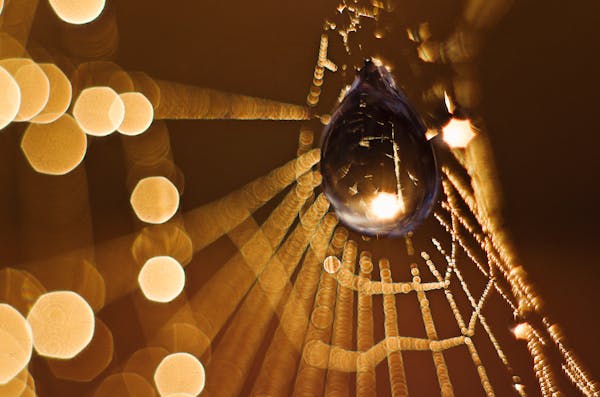
6,000+ species Active hunter
Black spider on web macro photography

Golden Orb Weaver

Nephila

Builds the largest orb webs in the world, spanning up to 2 meters. Their golden silk is stronger than Kevlar by weight.
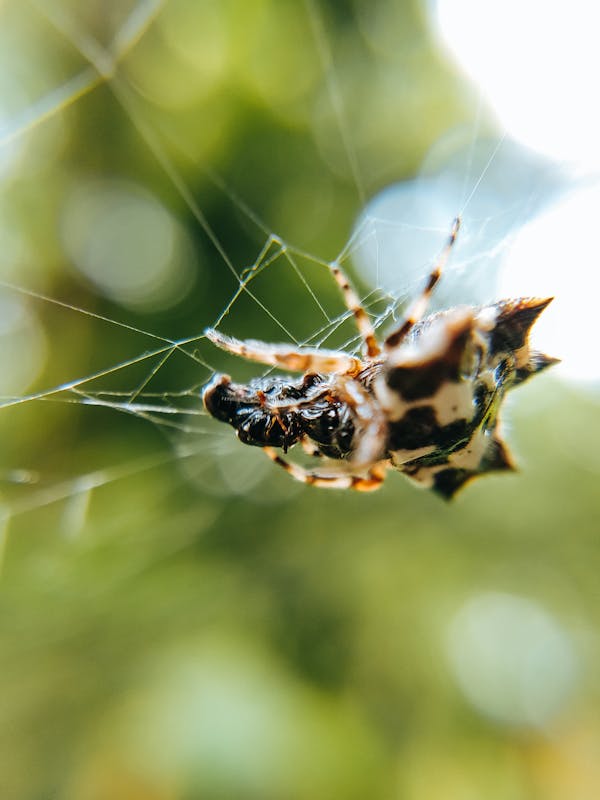
Tropical regions Web builder
Macro photography of a spider

Peacock Spider

Maratus volans

Males perform elaborate dances, raising colorful abdominal flaps in a display rivaling any bird of paradise. Only 5mm long.
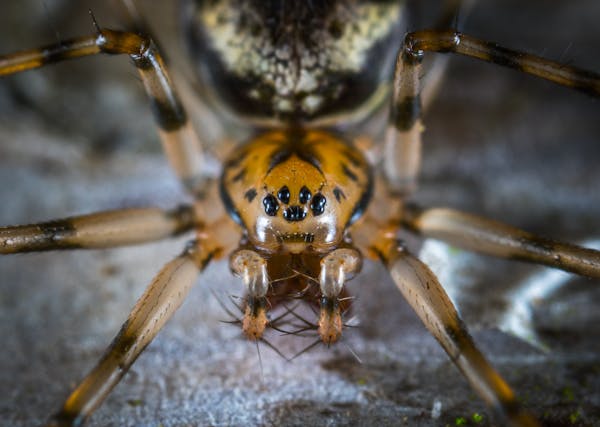
Australia 5mm body
Macro photography of brown spider

Trapdoor Spider

Ctenizidae

Constructs a silk-lined burrow with a hinged door made of soil and vegetation. Ambushes prey with explosive speed from hiding.
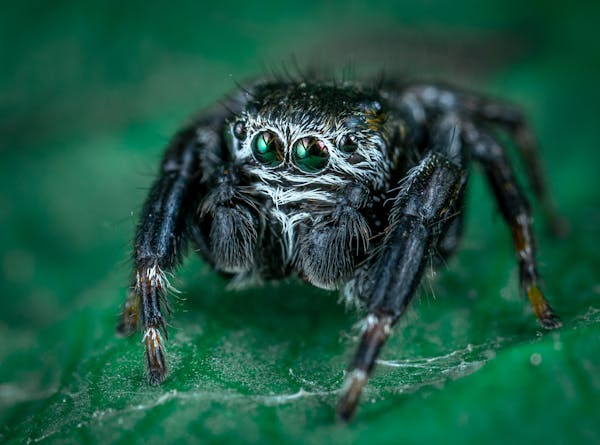
Ambush predator Burrow dweller
Macro photo of black spider

Black Widow

Latrodectus

Iconic red hourglass marking. Venom is 15x stronger than a rattlesnake's. Despite reputation, bites are rarely fatal to humans.
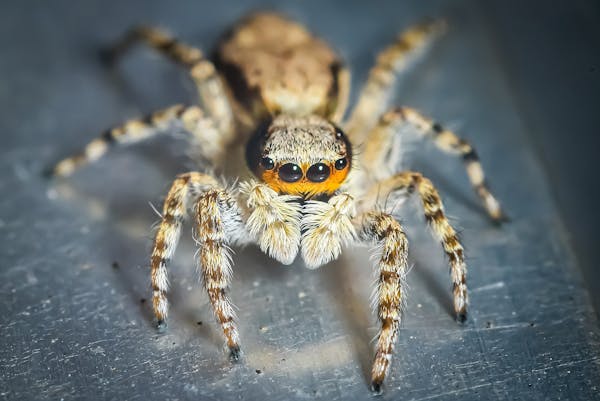
Worldwide Venomous
Close-up shot of a spider

Darwin's Bark Spider

Caerostris darwini

Produces the toughest biological material ever studied. Spins webs across rivers, with anchor lines up to 25 meters long.

Madagascar Toughest silk

Built different

Every part of a spider's body is a masterclass in evolutionary engineering.

◉ Eight Eyes

Most spiders have 8 eyes arranged in species-specific patterns. Jumping spiders have near-360-degree vision with their principal eyes rivaling eagle sharpness.

◉ Chelicerae

Fanged mouthparts that inject venom to paralyze prey and begin external digestion. Shape varies from pincer-like to downward-striking.

◉ Spinnerets

Silk-producing organs at the abdomen tip. Most spiders have 6 spinnerets, each with hundreds of microscopic spigots for different silk types.

◉ Book Lungs

Layered respiratory organs resembling pages of a book. Some spiders also have tracheae, allowing remarkably efficient oxygen absorption for their size.

◉ Pedipalps

Leg-like appendages near the mouth used for sensing, manipulation, and in males, sperm transfer during mating rituals.

◉ Hydraulic Legs

Spiders extend their legs using hydraulic pressure rather than muscles. This is why legs curl inward when they die. Enables explosive jumping power.

◉ Exoskeleton

A rigid outer shell of chitin that must be molted for growth. Young spiders may molt 5-10 times before reaching adulthood.

◉ Venom Glands

Nearly all spiders are venomous, but fewer than 30 species pose any medical risk to humans. Venom is a complex cocktail tailored to their prey.

Remarkable facts

01

Spiders eat more insects than birds and bats combined. Globally, spiders consume 400-800 million tons of insects annually.

02

Some spiders can fly. "Ballooning" spiders release silk threads that catch electric fields in the atmosphere, lifting them kilometers into the sky.

03

Spider silk is stronger than steel. Pound for pound, dragline silk has a higher tensile strength than steel and is more elastic than nylon.

04

There's a vegetarian spider. Bagheera kiplingi feeds primarily on protein-rich leaf tips of acacia plants, making it the only known herbivorous spider.

05

Some spiders live underwater. The diving bell spider (Argyroneta aquatica) creates an air bubble web beneath the water surface where it lives and hunts.

06

Spiders recycle their webs. Many orb weavers eat their old web each morning to reclaim the protein, then spin a fresh one in under 30 minutes.

Nature's wonder material

A single spider can produce up to 7 different types of silk, each with distinct properties for specific purposes.

Dragline Silk

The structural framework of webs and the spider's lifeline. Tensile strength of 1.75 GPa — comparable to high-grade steel alloy but 6x lighter.

Capture Spiral

Coated in sticky glycoprotein glue droplets. Can stretch to 3x its length without breaking, absorbing the kinetic energy of flying insects.

Egg Sac Silk

Tough, paper-like sheets that protect eggs from parasites, weather, and UV radiation. Some species produce multiple layers with different properties.

Wrapping Silk

The widest and toughest silk type, produced in broad ribbons. Used to immobilize prey by wrapping them at speeds up to 1,500 rpm.

Biomedical Potential

Researchers are developing synthetic spider silk for sutures, artificial ligaments, bulletproof vests, and biodegradable fishing lines.

Supercontraction

Spider silk shrinks up to 50% when wet, automatically tightening webs. This unique property is being studied for use in artificial muscles and robotics.

Fact vs. fiction

Spiders are among the most misunderstood creatures. Let's set the record straight.

"You swallow 8 spiders a year in your sleep"
Completely false. This "fact" was fabricated in 1993 by columnist Lisa Holst to demonstrate how easily misinformation spreads. Spiders actively avoid sleeping humans — the vibrations from breathing and heartbeat signal "predator" to them.
"All spiders are dangerous to humans"
Of the ~49,000 known species, fewer than 30 have venom that can cause medical issues in humans. Most spider fangs can't even penetrate human skin. Spiders are far more beneficial than harmful, controlling pest populations worldwide.
"Daddy longlegs are the most venomous spider"
A double myth. True daddy longlegs (harvestmen) aren't even spiders and have no venom at all. Cellar spiders (often confused with them) do have venom, but it's mild and their fangs can technically bite humans — it just causes no significant reaction.
"Spiders are aggressive and will chase you"
Spiders have terrible eyesight (except jumping spiders) and no interest in humans. What looks like "chasing" is usually a confused spider running in a random direction. They bite only as a last resort when physically pressed against skin.
"You're always within 3 feet of a spider"
While spiders are abundant, this statistic has no scientific basis. Spider density varies enormously by habitat. You might be near many in a garden, but far fewer in a modern building. The number was invented and repeated until it felt true.